
- Home
- WooCommerce
- What plugin are you looking for?
- Shopify
- What Do I Need?
- About us
- Blog
- Docs
- Contact us
- What can we help you with?

AI tools are everywhere right now, and it’s tempting. You describe your shipping logic to a chatbot, it generates a block of code, and, in theory, you’ve just built a custom shipping solution for free. No subscription fees, no vendor lock-in, no waiting for support.
Except it’s rarely that simple.
If you run an e-commerce store and you’re weighing up the idea of building your own AI-generated shipping solution versus using a proven, dedicated plugin or app, this article is for you.
We’re going to walk through what the DIY route actually looks like in practice, why it carries risks that are easy to underestimate, and why a well-maintained tool from a specialist team is almost always the smarter long-term investment.
To be fair, the idea of creating your own tool with AI is sincerely attractive. Modern AI coding assistants can generate PHP functions, hooks, and conditional logic surprisingly fast. You describe a shipping rule, for example, “free shipping for orders over $100, but only for the UK and only if the cart doesn’t contain hazardous products”, and you get working-looking code back within seconds.
For simple one-off tasks or learning exercises, that’s genuinely useful. But the moment you’re running a real store with real customers and real revenue, the equation changes fast.
The concept is similar to downloading nulled versions of apps and plugins. It’s always a gamble: they are free, they may work – but they also might do more harm than good. And you will never know which one it is until it’s too late.
Shipping plugins and apps interact directly with sensitive information: your checkout, cart data, and, in some cases, customer addresses. AI-generated code is not audited for security. It may be functionally correct today and introduce a vulnerability tomorrow – or it may have one from the start that neither you nor the AI noticed until it’s too late.
Well-maintained apps and plugins are developed by teams that are:
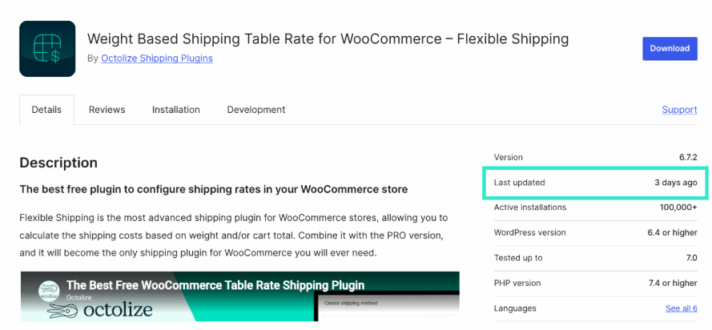
There’s a reason that regularity of updates is one of the key factors when choosing a shipping plugin for WooCommerce – an unmaintained plugin or app (or unmaintained custom code) is a security risk both for you and your customers.
E-commerce platforms like WooCommerce release multiple major and minor updates every year. Every time a platform updates, there’s a chance that custom code may break. Hooks get deprecated, database schemas change, checkout flows get restructured.
When you use a maintained tool, the development team handles all of this for you. They monitor changelogs, test against new releases, and push compatibility updates. With custom code, that responsibility falls entirely on you, your developer, or whichever AI tool you happen to ask next time something breaks at 11 PM on a Friday.
When your custom-built shipping logic starts returning incorrect rates, charging customers the wrong amount, or silently failing to display any shipping methods at all – who do you call?
With a plugin like Flexible Shipping PRO, you have access to a dedicated support team that knows the product inside and out. They understand edge cases. They’ve seen your problem before. They can diagnose and fix it quickly.
With AI-generated code, your support channel is… asking the AI again. And hoping it doesn’t introduce a new bug while fixing the old one.
Custom code that works on day one rarely stays that way forever. Business rules change. You add new product categories, new shipping zones, new carriers. Each change means modifying your custom code, retesting, and hoping nothing else breaks.
Plugins and apps are built to be configurable. Adding a new shipping rule in WooCommerce Flexible Shipping PRO or Shopify Shipping Rates Rules & Zones means filling in a form in your admin panel – not editing PHP. Scaling your shipping logic doesn’t require a developer; it requires a few minutes of your time.
One of the subtlest but most damaging risks of custom solutions is the edge-case problem. What happens when a customer’s cart sits exactly on the boundary of two weight ranges? What if a shipping class is missing from one of your zones? What if your free shipping rule triggers an order that ships to a country where it shouldn’t?
These gaps can result in customers being offered free shipping when they shouldn’t be, or not seeing any shipping options at all. Both options end with the same result: lost money. Either by paying for shipping out of pocket when it shouldn’t be free for a buyer, or by a customer abandoning their cart when no shipping methods show up.
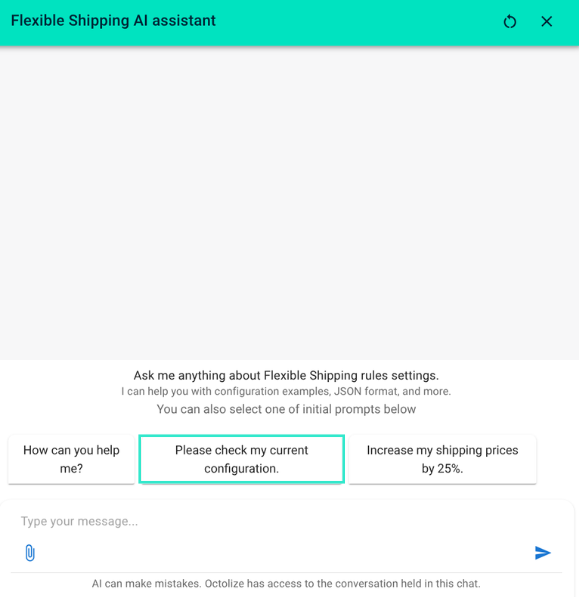
A well-designed solution is built to handle these scenarios gracefully. The Flexible Shipping PRO AI Assistant, for example, automatically detects configuration gaps and errors in your existing shipping setup – something hand-written code can’t do for itself.
Building a custom shipping solution with AI might seem like the cheaper option at first. Why commit to a monthly or yearly subscription when you can create your own tool for free?
Except it’s not really free.
Most AI agents require additional payment for tokens on top of the standard subscription fee. Shipping code can be very complex, especially for growing stores with evolving needs. It will likely quickly burn through all your tokens, requiring you to purchase more.
Additionally, every fix, adjustment, and update will require you to buy more and more tokens. In the end, instead of paying a fixed subscription fee once, the costs will keep piling up. It will be more difficult to manage and control them, making estimating your monthly business spending a challenge.
Building custom shipping code isn’t just about the shipping logic itself. Your code needs to play nicely with:
Octolize tools are designed to integrate with each other and with the broader platform ecosystem. The All Plugins Bundle exists precisely because store owners often need multiple plugins working together – and the team ensures they do.
Custom AI-generated code has no such guarantees. Compatibility issues are your problem to debug.

All of the Octolize plugins within one package for a fraction of the price.
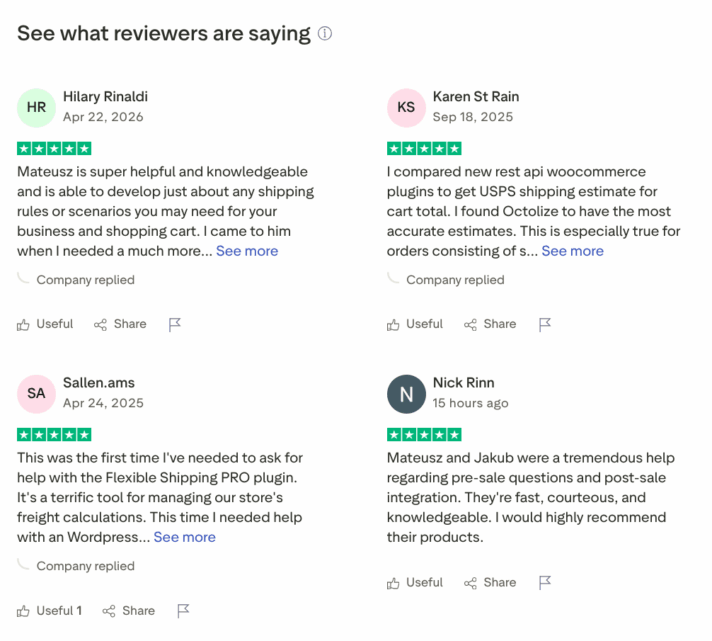
View DetailsorAdd to cartOctolize shipping solutions are used by over 100,000 active installations for Flexible Shipping alone. That number matters. It means the plugin has been stress-tested across thousands of different store configurations, hosting environments, platform versions, and use cases. Edge cases that would catch a custom solution off guard have almost certainly already been encountered, reported, and resolved. What is more, you can read real customer reviews to verify that.
When you choose a tool with that kind of adoption, you benefit from the collective experience of a vast user base – not just from what one AI model was trained on.
Here’s the nuance worth stating clearly: AI doesn’t have to be your enemy when it comes to shipping. It just needs to be used appropriately.
The AI Assistant available in Flexible Shipping PRO is a great example of AI used the right way. Instead of generating arbitrary code, it helps you configure your shipping rules within a controlled, tested environment.
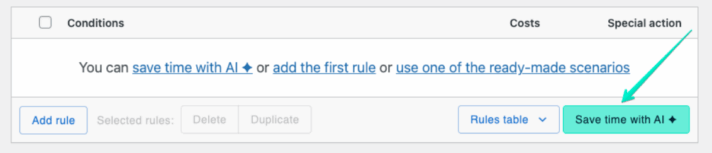
You describe your scenario in plain language, and the assistant generates a safe, ready-to-import configuration – one that works within the plugin’s established framework, respects all the edge cases, and can be reviewed before applying.
Contrary to generic AI agents and LLMs, Octolize’s built-in AI Assistant is specifically designed to solve issues with shipping configuration. It was trained on real-life cases and can only access internal data, which means it isn’t distracted by external resources that could confuse it or cause hallucinations.
That’s AI as a productivity tool within a proven system – not AI as a replacement for the system itself.
The cost of a quality shipping tool typically runs from $29 to $139 per year, depending on the product and platform you’re using – with bundles bringing that down significantly. Consider what the DIY alternative actually costs:
For most store owners, a maintained solution is not just safer – it’s cheaper.
To make it concrete, here’s what choosing a proven Octolize plugin actually includes:
None of that comes with a block of AI-generated PHP code.
Shipping is one of the most critical parts of your customer’s experience. A well-configured shipping setup reduces cart abandonment, builds trust, and keeps customers coming back. A broken or poorly-maintained one does the opposite.
AI can be a helpful assistant – especially when it’s embedded within a product like Flexible Shipping PRO, where it helps you configure things faster without sacrificing reliability. But using AI to replace a purpose-built, maintained, supported shipping solution is a shortcut that tends to cost more than it saves.
Octolize products exist specifically to solve the complex, real-world shipping challenges that e-commerce store owners face every day. They’re built by specialists, maintained continuously, and backed by real human support. That’s not something you can generate with a prompt.

Lucyna Polok is an SEO and content specialist passionate about crafting effective strategies and creating engaging content. She has worked across a variety of industries, both in-house and as a freelancer. A strong believer in the power of storytelling, she believes that good content not only delivers business results, but also resonates with customers through an emotional connection with a brand.
At Octolize, she is responsible for aligning the content strategy with business goals and increasing visibility, trust, and authority of the brand via data-based SEO efforts. On the blog, she focuses mostly on topics for those only beginning their adventure with e-commerce, explaining scenarios and terms in an approachable way.




Learn how Octolize helped Kurzgesagt, the online shop behind one of YouTube’s most popular science channels, set up conditional courier rules using the Shopify Shipping Rates Rules & Zones app.

Learn how Octolize solutions helped WooCommerce store based in the United Kingdom set up shipping scenarios.
Learn how Octolize helped Shopify store based in the USA set up distance based rates with a usage of Octolize Distance Based Rates.
 Pickup Points